
Microdramas, Social Media, Archives: Rethinking How Media Moves
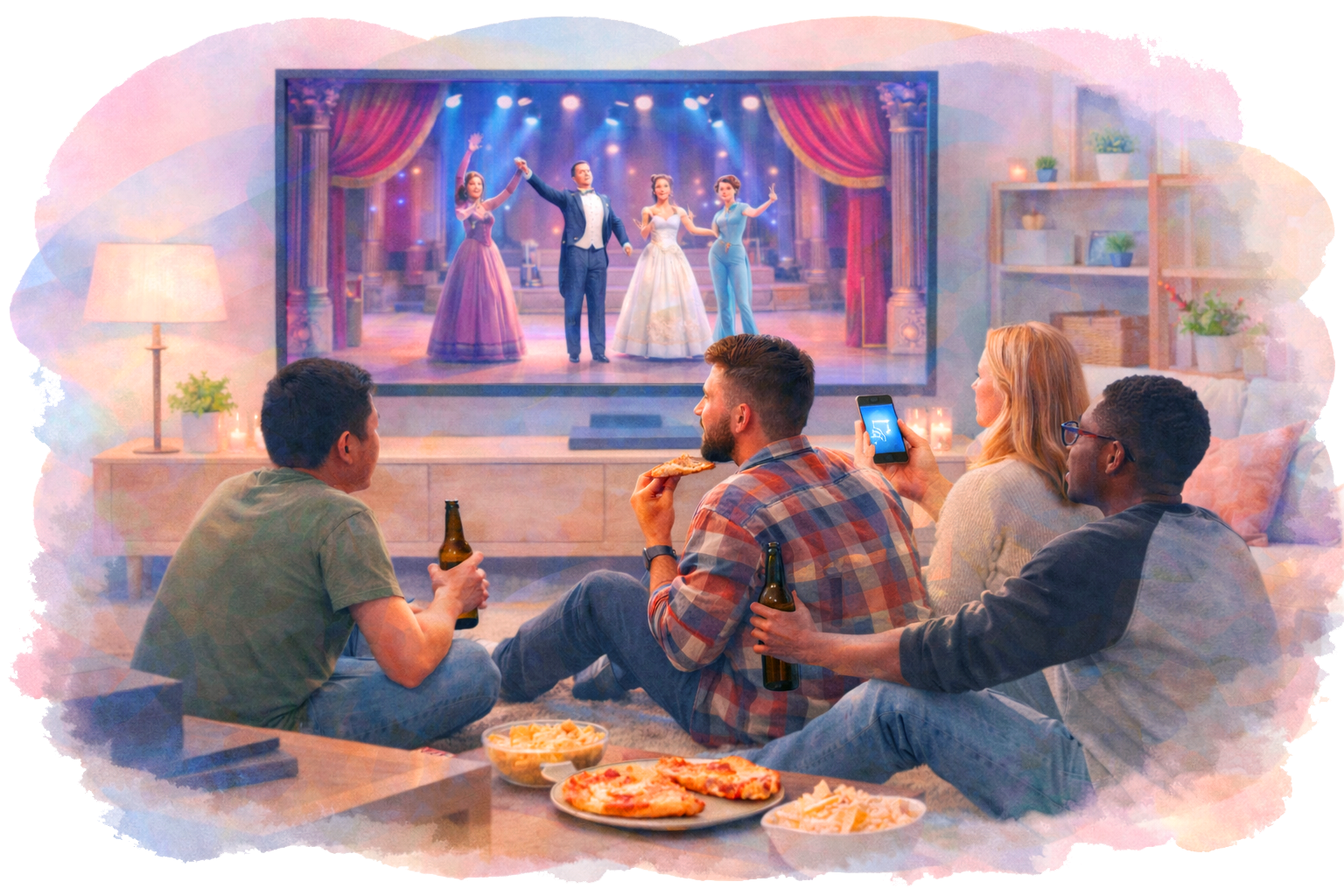
The way we create, share, and experience media is evolving in real time. Stories travel across screens, formats, and communities, but distribution and licensing systems stay frozen in place.
There's more content being made right now than ever before: catalogues of shows to binge-watch, 3-hour podcast episodes, 1-minute clips of those same podcasts, YouTube videos, social posts from friends and internet strangers, AI-generated content, curated mashups, and digitized archives.
The old infrastructure buckles under the weight of modern consumption habits. Content gets held back by decisions made in the old media world: avoiding risk, relying on outdated business models, ignoring anything outside that system. The old guard doesn't have the incentive or tools to rethink it.
Here's where the cracks show.
Microdramas are working, but locked down
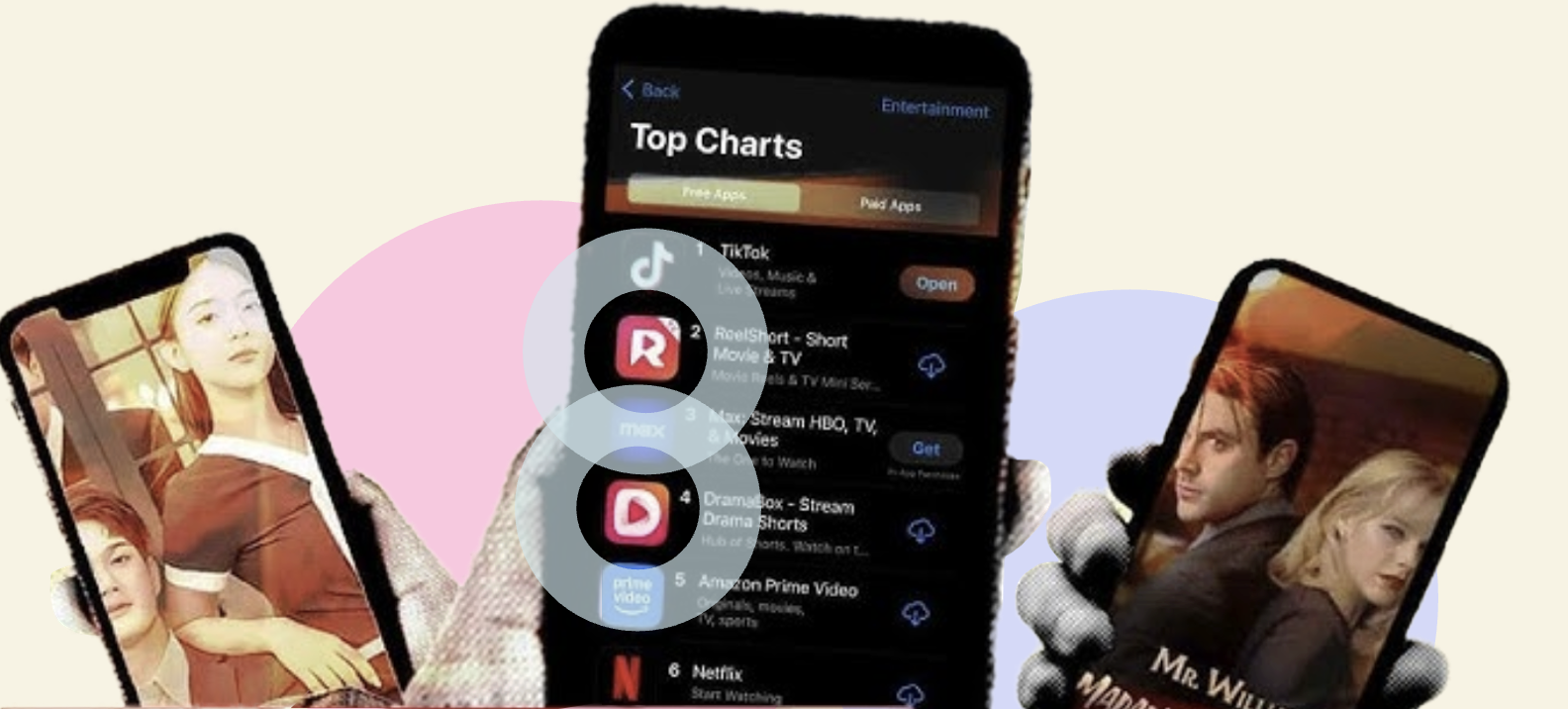
Microdramas are a good example. They're working for audiences because they feel more manageable and less demanding than traditional long-form TV shows. Watching short, serialized stories vertically on your phone fits smaller attention spans and moments in between other parts of life.
The market is massive. In 2024 microdramas generated $11 billion globally and are projected to hit $25+ billion by 2030. Creators are producing hundreds of series weekly. But most microdrama platforms today are still built as closed, single-format apps. ReelShort, DramaBox, and GoodShort all lock content in app silos. Each experience is limited to one catalog, with one company being paid per app, and the content plays on just one screen.
Creators have no ownership over audience relationships or downstream revenue. Viral clips get de-monetized or taken down. People can't remix, annotate, or build fan communities around the content. Viewers are stuck on mobile with no native way to cast to TV or discover content across platforms. When users try third-party screen mirroring apps, they glitch on vertical DRM-locked streams, crop poorly, or fail completely.
Meanwhile, people actually want to cast vertical videos from their phones to TVs. Gen Z curates playlists, skips filler episodes, adds commentary, and friend groups binge 100-episode sagas in weekend marathons. The hardware side isn't helping. At CES 2026, TV makers pushed bigger, brighter screens with AI upscaling and lifestyle displays, but everything stayed horizontal, passive, and living room focused. Disney+ just announced vertical video support, which shows the industry is catching up, but the infrastructure still isn't there.
The pattern repeats everywhere
The same constraint shows up across streaming platforms, but the stakes get higher when you move beyond single-format apps.
Streaming TV apps deliver finished content well, but they're not designed for remixing, layering, or interaction. Social media platforms handle distribution, but they're terrible at ownership rights and paying creators appropriately.
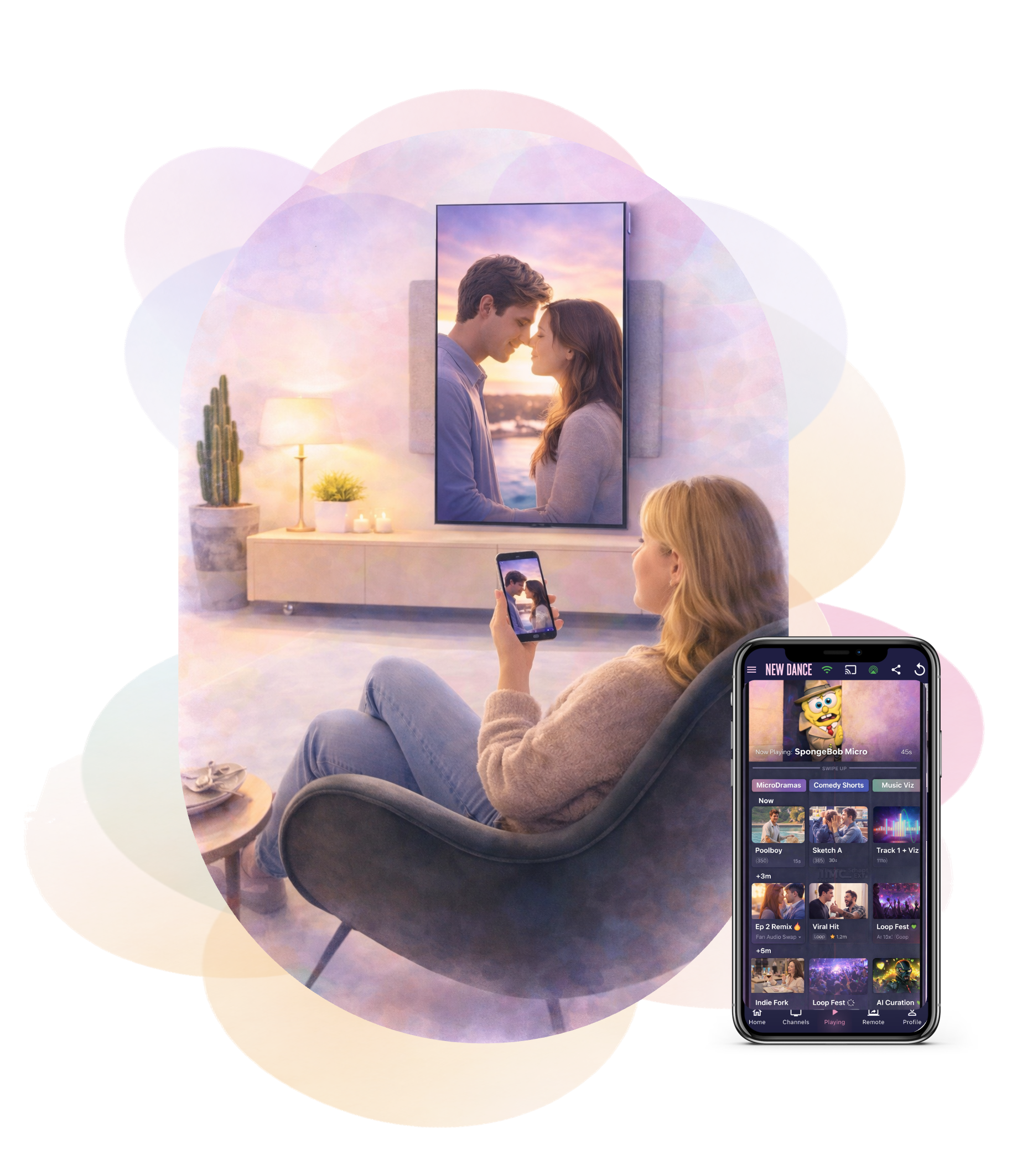
So people hack around it. They watch something on TV, react on their phone, share clips somewhere else, add context manually, jump across apps and screens just to create an experience that feels natural. People want this to work better, but they don't trust one company controlling it all. That's reasonable, but it makes everything fragmented and chaotic.
And when you add complex rights structures into the mix, the whole system breaks down.
Broadway is locked in a vault
At the opposite end, you have cultural institutions and performance archives. They have incredible material, but they rarely put full works or even clips on streaming or social platforms. Most of it sits on hard drives or physical media, invisible to the public.
The New York Public Library has thousands of Broadway and Off-Broadway productions professionally recorded, digitized, and protected, but access is extremely restricted: it requires on-site viewing only, one viewing per person per title, no browsing or sharing, and you need a NYPL card plus a special collections account. There’s no remote access, no clipping, no way to engage with the material beyond sitting in a supervised room.
This happens because navigating the IP rights is a nightmare. Between the producers, investors, playwrights, composers, performers, understudies, unions, guilds, music rights holders, and venue agreements, everyone has a stake and the contracts are absurdly complex. Residuals, permissions, and downstream usage all overlap in ways that make distribution feel legally impossible.
So the safest option has been not to distribute at all. That keeps these recordings invisible to most people, especially younger audiences and anyone outside New York City. Meanwhile, the queer community has been sharing music videos at literally every party for decades, curating and casting content from phones to TVs in social settings. Broadway could work the same way, sharing songs, clips or whole numbers, exponentially increasing their visibility. Sadly, the infrastructure doesn't exist to make it legally viable.
Building for participation
A different system would work like this: Fans discover the Broadway show through curated channels, clips, and commentary, watching on their phone or casting to a TV. If the production allows it, they can add reactions, create highlight cuts, or share sequences. Views and interactions get logged per layer, revenue comes from ads, subscriptions, or pay-per-view, and splits happen automatically based on pre-agreed rules. Fans become participants, shows stay culturally alive, and Broadway content reaches younger and larger audiences in the formats they already use without giving away IP control. Increasing revenue, appreciation, viewership and outreach.
What remix culture already proves
We already have real-world test cases for premium media remixing. It's happening now, just without a clear business model.
Take “High School Musical”. I was too old to fully enjoy it when it came out, but it's basically the young millennial's Grease, right? The original movie was about 1 hour and 40 minutes, but Disney+ cut it into over 50 clips (15 to 60 seconds each) and put them on TikTok.
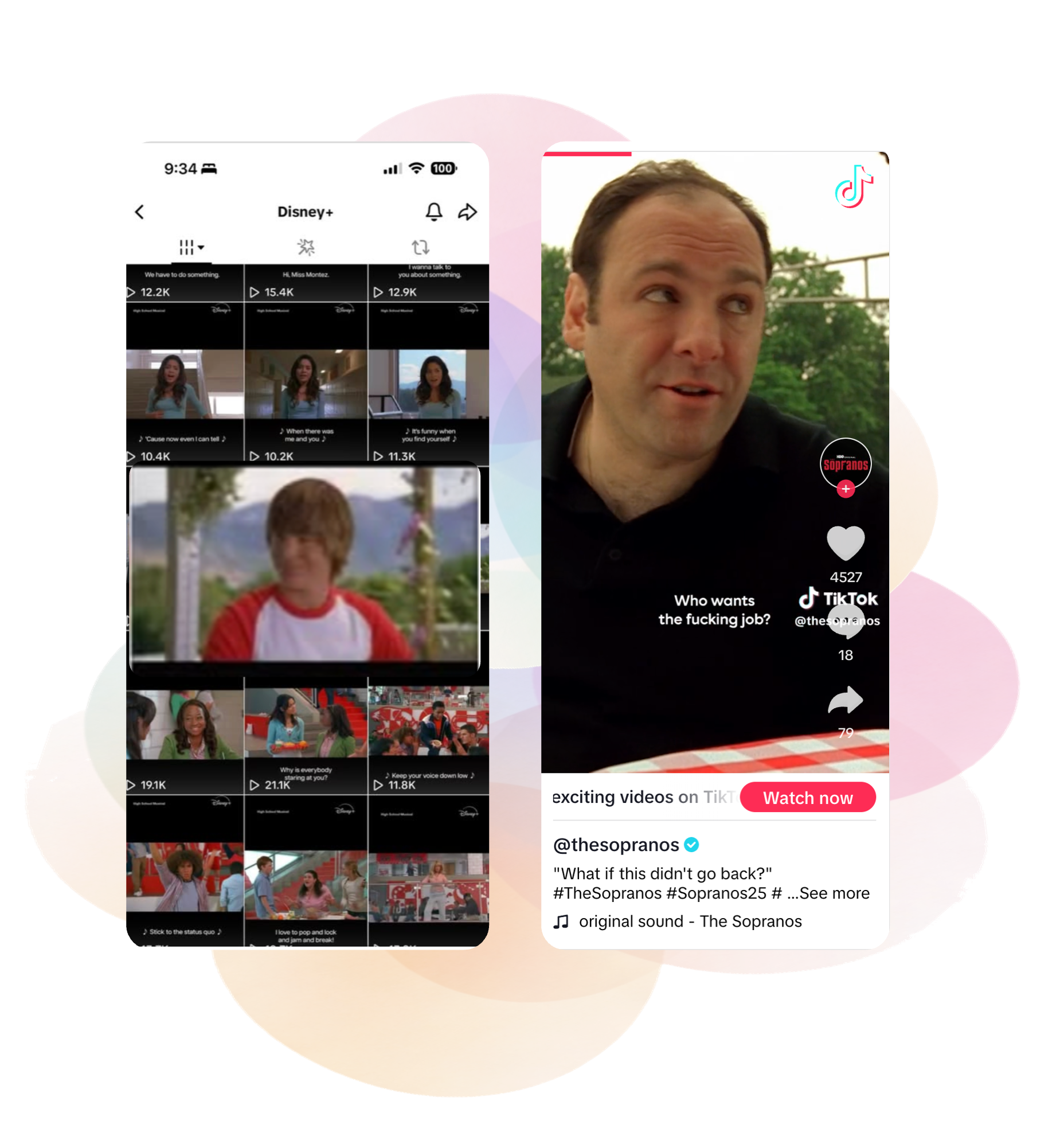
Some of these posts got tens of thousands of likes. Fans are remixing, reframing, adding commentary, and reintroducing scenes to new audiences. That's valuable, but the economics are broken. TikTok and Disney split the revenue, but if a user creates a remix with their own commentary, they can't monetize it because it's not purely original content.
The same thing happened with The Sopranos. I binged it a few years ago because I'm a fan of Mad Men (some of the same writers and actors) and because a lot of my relatives talk like the characters on the show.
For the 25th anniversary, HBO released ultra-condensed summaries. You could watch all 86 episodes in about 36 minutes. Fans had already been doing this for years, cutting scenes, summarizing arcs, remixing moments, sharing them across platforms. But it was a lot of creative labor done for free, with the constant risk of copyright takedowns.
So here’s the problem:
Today's systems force this into a gray zone
Rights holders lose visibility and control
Creators and fans generate value without compensation
Platforms extract attention without taking responsibility
Everyone is doing the work and no one is aligned.
Why infrastructure matters
Content doesn't stay in one form anymore. It gets cut up, remixed, and shared in endless variations. Without systems that can track those variations, compensate the people involved, and let material evolve legally, we keep repeating the same cycle: unofficial remixing, lost revenue, stripped context, and platforms that benefit without accountability.
The solution needs to be layered with commonly agreed upon rules. It should get out of the way and let culture evolve without breaking trust. The goal is to build better systems for how media transforms, gets interpreted, and gets paid for.
Once you see the flaws in today's system, you can’t unsee them.
What comes next
The future of media will be defined by infrastructure, not format.
That's what we're building at Ambistream: a programmable media protocol where streams are layered, contributions are tracked, and reuse triggers attribution and payment automatically. It works across phones, TVs, and whatever comes next. Culture can move the way it already wants to.
We hold 6 granted U.S. patents covering this infrastructure.
How you can help: Share the vision
Connect us to investors who are inspired to build this New Vision of Television® and beyond with us. This is media that works with and for the viewer.
This is article 1 of the series “The Infrastructure for Programmable Media”. In the next post, I'll show how the layers actually work. Stay tuned.