
From Walled Gardens to Open Networks: How Programmable Media Pays Creators Better
This is article 5 of the series "The Infrastructure for Programmable Media."
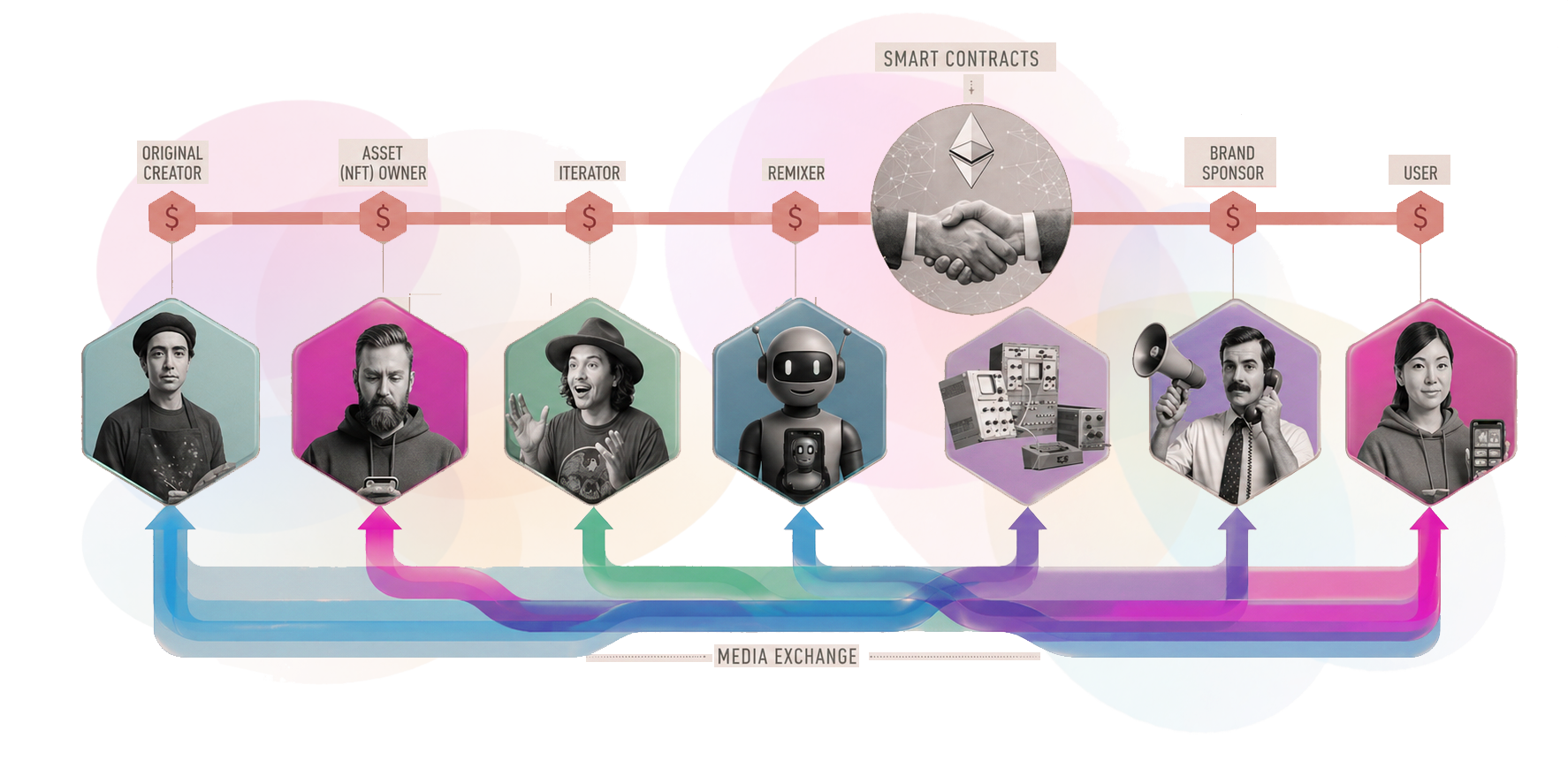
So far in this series we covered why media infrastructure keeps breaking, how multilayered media allows creators and curators to do new things, what opens up when premium content allows remixing and forking, and how AI agents can become content producers to coordinate all of that at scale. The last article ended with a question: when AI agents are assembling and distributing media continuously, who gets paid for what, and how does the system figure that out automatically? This article is about the economics that work for the old and new media ecosystems.
This is a fintech story wearing a streaming costume
When I go to fintech events and talk about what we are building, people usually look at me with confusion. People hear "media platform" and think Netflix or Spotify with standard payments. That means that I have to reframe the conversation quickly by describing how digital assets are being exchanged in new ways, before the person I’m talking to loses interest. It goes something like this:
What we are building is the infrastructure underneath the media clips and compilations. We are able to track ownership, provenance, and payments to multiple parties, and pay everyone based on the terms attached to each asset automatically. Since we deal with multiple layers of media from different sources, we can see what combination of clips users viewed and if they made a purchase or interaction. That info is used to calculate a smart contract to pay all the contributors back quickly.
The media that we’re monetizing is usually related to audio and video, but the underlying tech is very similar to any digital exchange. We’re creating a new way to allow people to legally remix content, but really it’s an exchange of media, ads, preferences, data, AI decisioning and currencies. So… it’s an everything exchange.
Quick history lesson: Money follows tech innovation
The internet started with government and investor money, moved to walled gardens, and eventually became ad-funded once platforms figured out that attention at scale was worth a lot. More recently, direct creator payments became common through subscriptions and digital tip jars. Each phase was a response to how money was moving (or failing to move). For media specifically, we can look at the changes that happened to the music industry:
Physical CDs albums were too expensive → Users illegally downloaded MP3s for individual song → iTunes created legal ways to buy individual songs
Streaming services became conventient → Platforms take most of the money and don’t pay artists enough → Prices increase because of greed → Users and cancelling services or going back to physical or illegal media
The pattern in both cases is the similar because the users and technology innovated and waited for the industry to catch up. Also, the economics were built for one one asset at a time, usuallly on one platform. And now the innovations are happening in a world where content is layered, hyper-personalized, remixed by multiple contributors, and moving across platforms simultaneously with different stakeholders. Keeping the payment systems the same as they were 10 or 20 years ago benefits the old industries and companies but doesn’t match what people and contributors want in terms of costs and earnings.
Following the full journey
Think about what happens when a creator uploads a vocal track, a curator clips 30 seconds of it into a themed channel mix, an AI agent reformats that mix for a different device, and a brand sponsors the layer sitting alongside it. The original creator should be paid for every one of those interactions, but today almost none of it gets calculated or paid back to them once it gets transformed in any way.
Programmable media tracks this across multiple dimensions:
which audio and video layers played in which environment
how much of the original appeared in a remix as a percentage of the total runtime
which device the viewing happened on
whether a sponsored layer was seen or skipped
what the AI agent consumed in compute costs to assemble the mix
which rights terms the creator set when their work entered the system
That layer-level observation is what makes accurate payments possible for everyone in the chain.
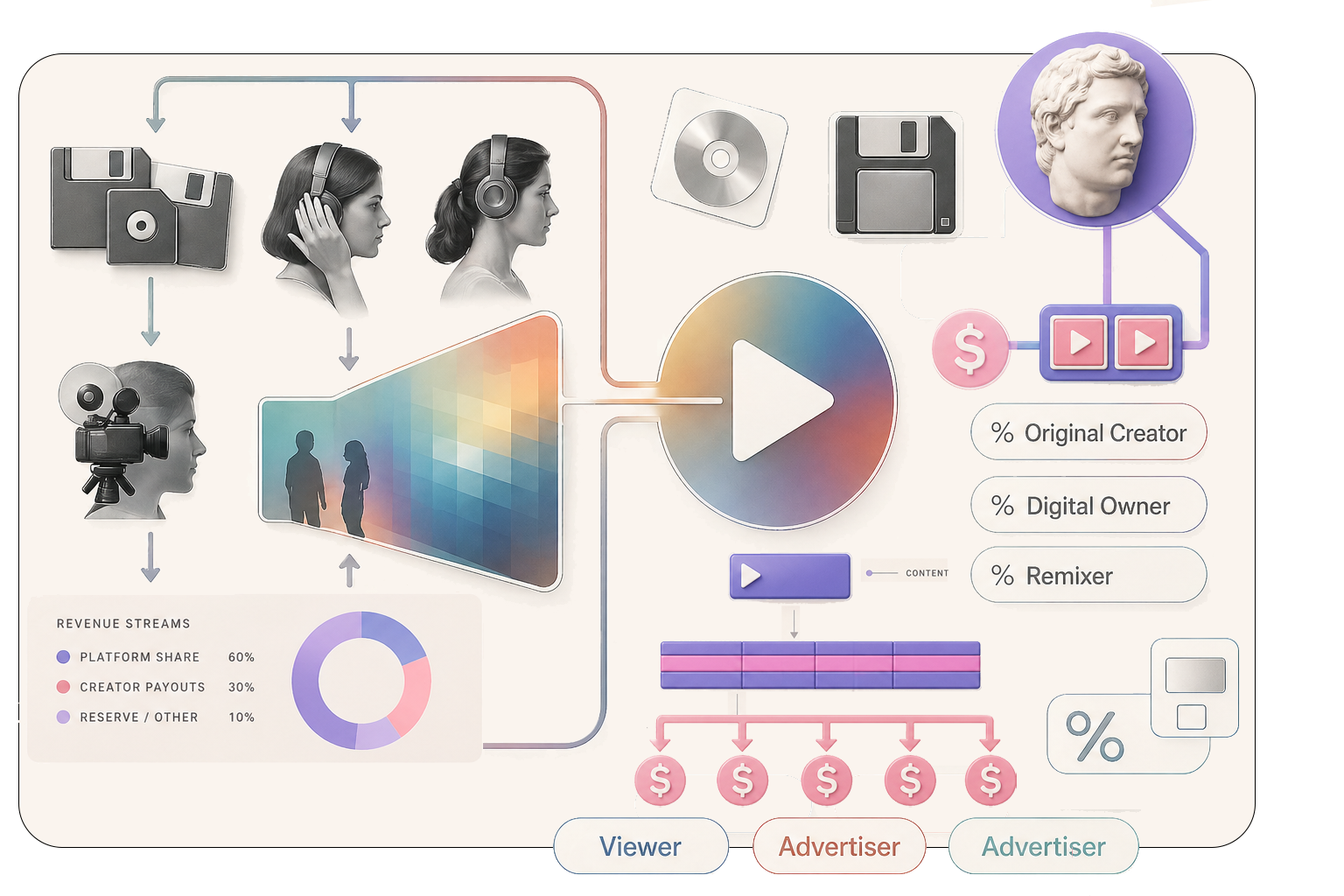
This is what AI thinks we do in some abstract way, it doesn’t make sense but it looks kinda cool
Where tokenization and fractionalization come in
Let’s talk Web3 for a minute. I can already tell that you either feel confident in your knowledge or you have a knee-jerk reaction based on the news. It’s understandable since the news usually associates Web 3 with speculation and collectibles that go up or down based on whatever is trending. But there is something deeper in the underlying concepts:
A smart contract is basically an algorithm that pays multiple people automatically, verifies the right amounts went to the right places, and skips the invoice-chasing phase that creators loathe
Fractionalization means breaking ownership or revenue rights into smaller pieces. Real estate investors have been doing this for years with property funds, and the same concept applies to a song, a film clip, or a remix of any media or data
Tokenization is how you represent those fractional stakes digitally, whether as a crypto token, a smart contract entry, or just regular money linked to a record in a database
These tools work less like a crypto play and more like an accounting layer. Smart contracts are used to make everthing run faster, cheaper, and auditable, while allowing payments to be made with fiat currencies (old-school money), stablecoins, layer 2 tokens, or internal credits depending on the context and rules decided by the participants in the ecosystem.
Wait, who is in this ecosystem?
Speaking of participants, let’s name the potential contributors:
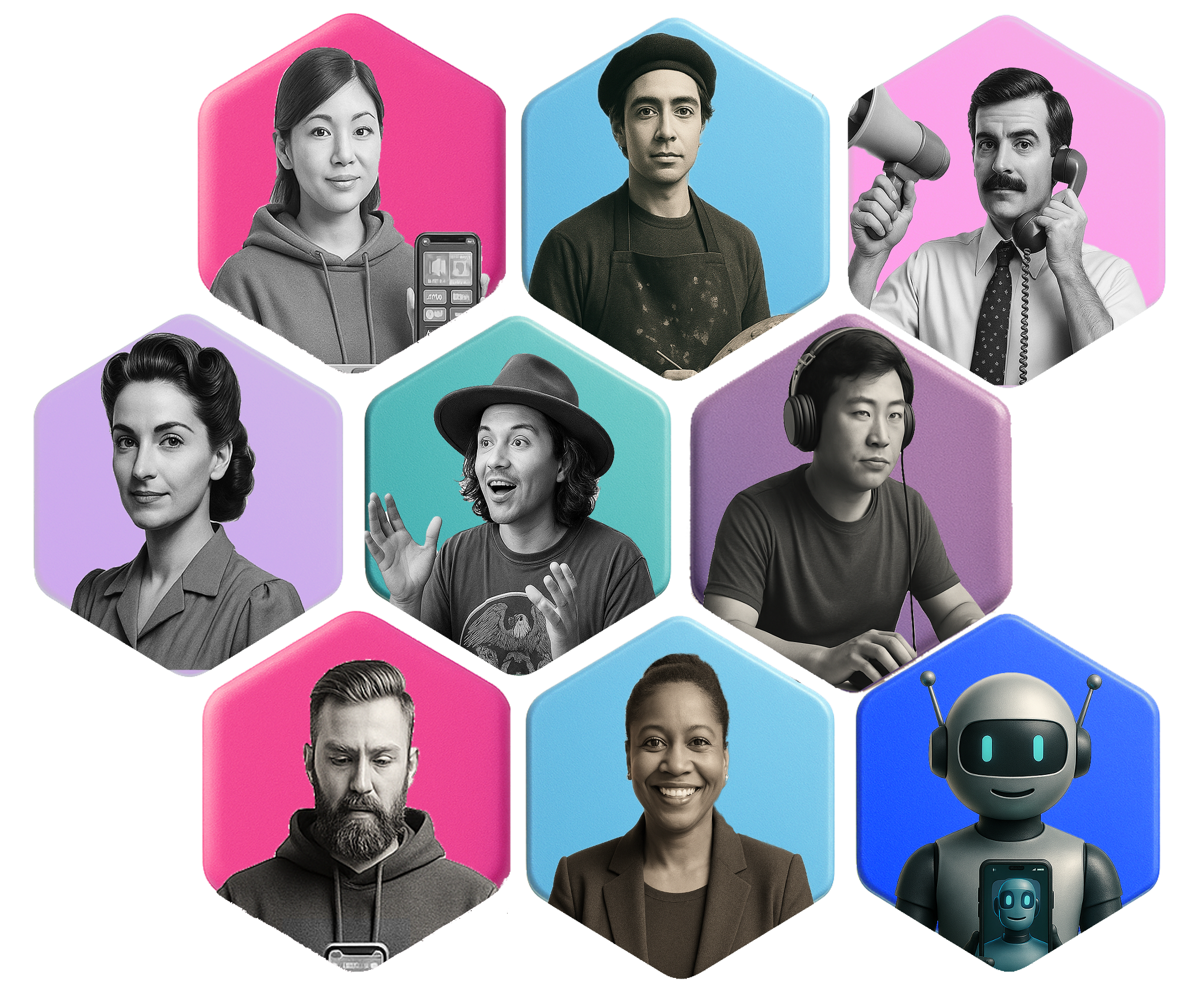
Original creators: musicians, filmmakers, and anyone producing raw material
Licensing entities: labels, publishers, or rights holders representing creators
Content producers: curators who assemble raw elements into channels, mixes, and media experiences
Remixers: People or AI agents who modify or apply filters to transform media elements
Brands: sponsors integrating messaging into content in exchange for audience access
Audiences: Indivisuals or collective groups who consume or interact with media and pay through their engagement data or payments
Third party tech: content verification services, hosting platforms, distribution infrastructure, etc
The platform itself: governing the rules and ensuring flows between all parties are tracked and settled
What makes this different from today is that every one of those participants can be a person, an organization, or an AI agent/software, and the system accounts for that economically.
Open and closed environments
People also assume that there is just one marketplace, but all of these transactions can happen on a major platform, inside closed ecosystems, or across multiple open and closed environments. That’s important to think about because a broadcaster could run a private channel with different economic requirements compared to an app that specializes in remixing. A hospital has a whole different set of rules and compliance, so the digital assets they create and distribute would operate with different rules than an independent curator building a niche music channel. Some organizations might have factors that change the costs of items based on the regions their partners are in or agreements between them. But the point is that the economics travel with the digital assets regardless of which environment it moves through, which gives it lasting relevance.
From towers to networks
The web2 companies that dominated the internet from roughly 2005 onward concentrated money at the platform level. Revenue flows upward, and a portion trickles back to creators as a percentage of a percentage, calculated inside systems they have little visibility into. A musician on a major streaming platform doesn’t know why their track got surfaced or buried, and a video creator isn’t told how the advertising rate on their content was set. That’s because the major decisions happen inside the walls of these big companies with opaque operating procedures, and the creators are forced to participate without having a say.
The system we’re creating allows the value to flow from viewers to curators to remixers to original creators and to AI agents, with each participant receiving their share at the moment it is earned rather than weeks or months later. The people assembling channels and building audio and video mixes are doing real editorial work.
This also allows creators to get paid more than once for their creation when it’s used in its original form or in an edited form in someone else's compilation. If a remixer builds something that reaches a larger audience, the original creators receive the benefits too.
How Intra.luxe shares the wealth
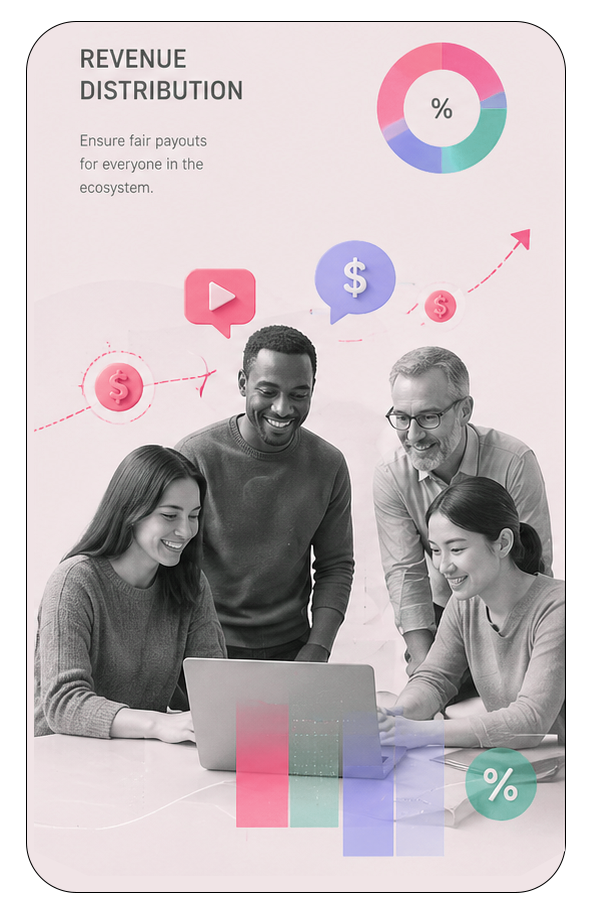
Intra.luxe is the name for a project that gives media elements, ad layers, user preferences, data, and payment terms a shared record so they can travel through the ecosystem together and compensate everyone who contributed to them. Creators can upload existing media they made outside the platform, generate content inside the ecosystem, or bring work in through third party integrations. Regardless of how it arrives, Intra.luxe records the configuration as a verifiable record at the point of entry. Every fork, derivative, and remix branches from that record and traces back to it. The ownership rights and payment splits are encoded at that moment and travel with the work wherever it goes.
In practice this means:
Every media structure gets a data profile recording its composition, the proportion of original elements it contains, and the rights terms attached to each
Every fork and remix is recorded as a linked variation that permanently traces back to its source, no matter how many changes occur between the original and what eventually plays
Payment terms are set the moment the work enters the system, so the creator's terms travel with the work
Residual payments become automatic, meaning a remix made today still pays the original creator when it surfaces two years from now on a platform that did not exist when the work was uploaded
A brand that sponsored a specific layer gets billed based on whether that layer actually played and on which device. AI agent compute costs are tracked as a line item alongside every other cost.
The license becomes part of the asset rather than a separate document. One might even call it… wait for it… Programmable Media. And because it runs on smart contracts, payments are issued when the conditions are met, because the terms were already there when the work was created.
What this unlocks
A few things become possible that are not possible today:
A creator who allows remixing earns from every modified and edited version of their work proportionally and automatically, without any additional action on their part
A curator can be paid for the editorial labor of assembling a channel
An institution with an audio or video archive earns every time a micro clip from that archive plays anywhere, years after the original licensing agreement was signed
An investor can potentially hold a participation stake in an artist, a specific media work, or a channel and receive ongoing revenue distributions (it’s like investing in an AirBnB vs. an empty apartment for media!)
Legal remix culture becomes economically viable at scale because the license travels with the asset, multiple contributors can add iterations and commentary to the original media elements and clips, and the payments for this are executed automatically
Brands can pay users directly or subsidize their media costs for their attention and engagement rather than routing everything through a platform intermediary
The goal is infrastructure that tracks contribution accurately and settles it in proportion to what happened. The old system was built for a world where finished works moved in one direction. This one is built for a world where audio and video content keeps moving, branching, and generating value across environments and years.
It’s about multiple stakeholders sharing (Intra) their media and earnings (luxe) with each other.
What comes next in the Infrastructure for Programmable Media series:
Part 6 covers personalization, custom message inserts and insertions of brand-sponsored content. We will explain how brands and ad agencies can become a participant and contributor to these new economic systems instead of being an annoying interruption inserted between content.
Disclaimer: This article is for informational purposes only and does not constitute legal, financial, tax, or investment advice. Any discussion of tokenization, fractionalization, or smart contracts is conceptual and does not represent a live offering or solicitation.
Reach out to us partner with us to build a New Vision of Television®